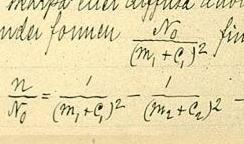
In 1888. Johannes Rydberg wrote equation describing spectral series for Hydrogen-like elements.
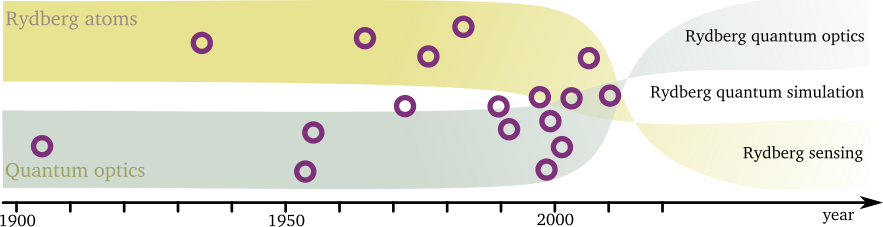
Click on circles to explore events that marked development of Rydberg atomic physics and Quantum optics in the century that followed, that gave rise to present day Rydberg physics.
Formula that Rydberg presented to Matematisk-Fysiska Föreningen, Lund (Sweden) in 1888.
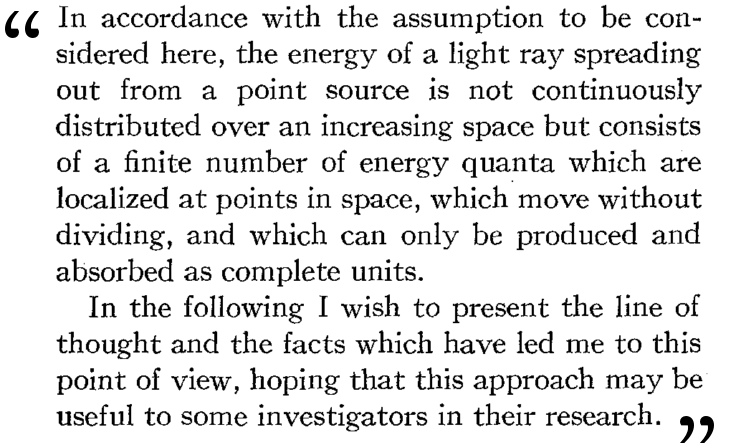
1905 - Einstein introduces the concept of photons.
A. Einstein, "Über einen die Erzeugung und Verwandlung des Lichtes betreffenden heuristischen Gesichtspunkt", Ann. Physik 17, 132 (1905)
Text excerpt reproduced from A. B. Arons and M. B. Pippard, "Einstein's Proposal of The Photon Concept - a Translation of the Annalen der Physik Paper of 1905" Am. J. Phys. 33, 367 (1965), with the permission of the American Association of Physics Teachers.
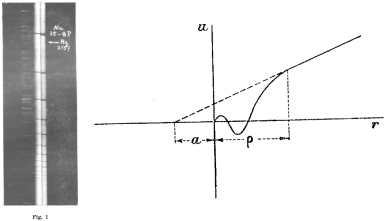
1934 - E. Amaldi and E. Segrè observe offsets in transition frequencies in dense atomic spectra. Enrico Fermi introduces the concept of a scattering length to explain results.
Figure 1 reprinted by permission from Spinger Nature: Società Italiana di Fisica Il Nuovo Cimento 11, 145, "Effetto della Pressione Sui Termini Elevati Degli Alcalini", E. Amaldi, and E. Segrè, © 1934. Figure 1 reprinted by permission from Spinger Nature: Società Italiana di Fisica Il Nuovo Cimento 13, 157 "Sopra lo Spostamento per Pressione delle Righe Elevate delle Serie Spettrali", E. Fermi, © 1934.
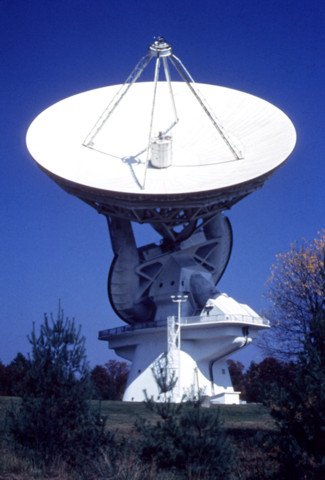
1965 - Transitions between Rydberg energy levels with n~110 observed in space by National Radio Astronomy Observatory (West Virginia) radio telescopes.
A. B. Höglund, and P. G. Mezger, Science 150 (1965), 339.
Image: National Radio Astronomy Observatory 140-foot telescope, whose construction was completed in 1965. © National Radio Astronomy Observatory (NRAO), Associated Universities, Inc. (AUI), and the National Science Foundation (NSF), CC BY 3.0 license.
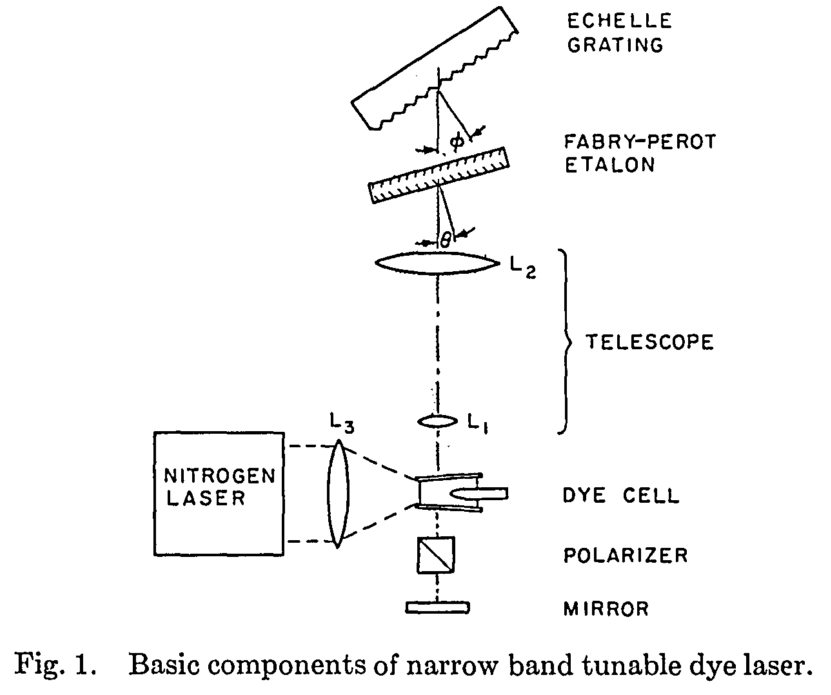
1972 - T. W. Hansch constructs a narrowband, highly tunable dye laser. This allowed precision laser spectroscopy of high-lying Rydberg states.
Figure 1. reproduced with permission from T. W. Hänsch, "Repetitively Pulsed Tunable Dye Laser for High Resolution Spectroscopy", Applied Optics 11, 895 (1972), © OSA, 1972
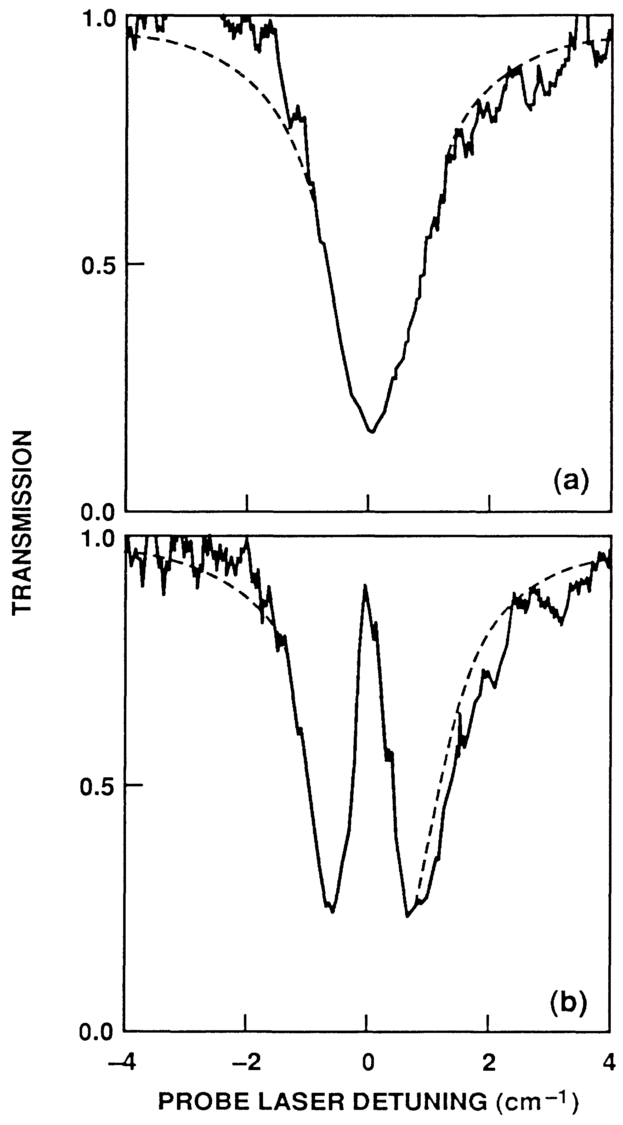
1991 - Observation of electromagnetically induced transparency
Reprinted Figure 2. with permission from K.-J. Boller, A. Imamoğlu, and S. E. Harris, "Observation of electromagnetically induced transparency", Physical Review Letters 66, 2593 (1991). Copyright (1991) by the American Physical Society.
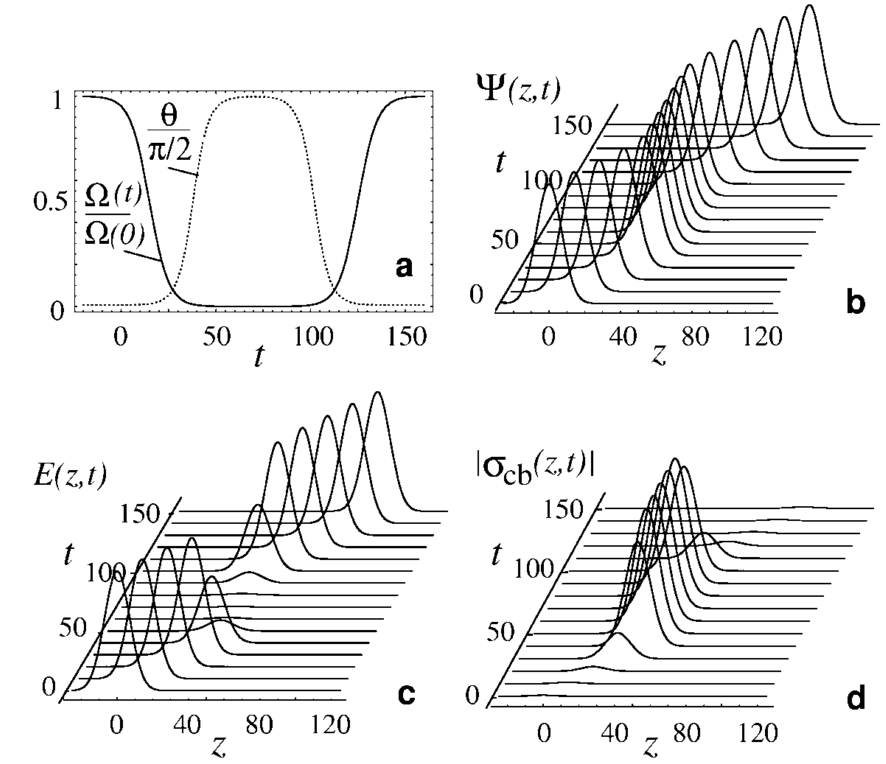
2000 - The concept of a polariton, adopted from solid state physics, is introduced into quantum optics to describe propagation of light under electromagnetically induced transparency, where light is coherently coupled the atomic medium excitation.
Reprinted figure 2. with permission from M. Fleischhauer and M. D. Lukin, "Dark-state polaritons in electromagnetically induced transparency", Physical Review Letters 84, 5094 (2000). Copyright 2000 by the American Physical Society.
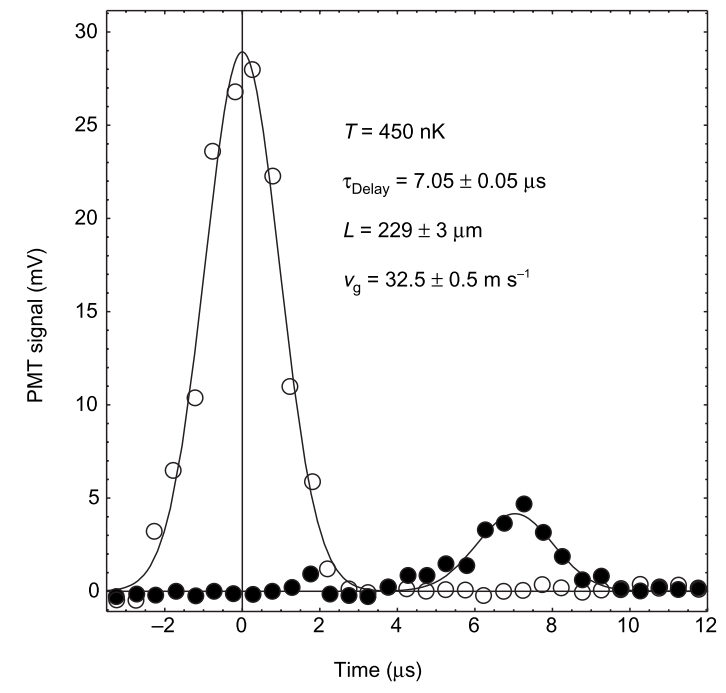
1999 - Observation of slowing down of light pulse to 17 m/s under propagation in the transparency window of electromagnetically induced transparency (EIT)
Reprinted by permission from Springer Nature: Macmillan Magazines Ltd Nature 397, 594, " Light speed reduction to 17 metres per second in an ultracold atomic gas", L. V. Hau, S. E. Harris, Z. Dutton and C. H. Behroozi, © 1999.
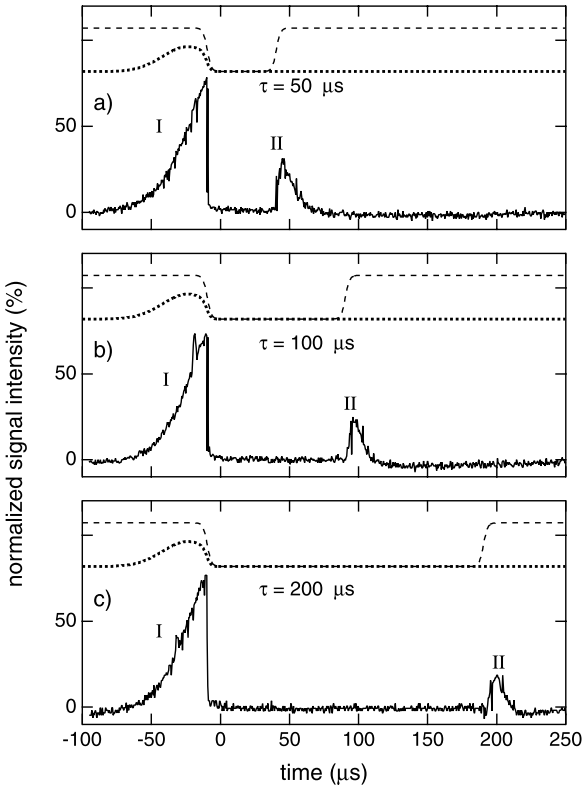
2001 - Storage and retrival of light pulses in atomic vapour
Reprinted Figure 2. with permission from D. Phillips, A. Fleischhauer, A. Mair, R. L. Walsworth and M. D. Lukin, "Storage of Light in Atomic Vapor", Physical Review Letters 86, 783 (2001). Copyright (2001) by the American Physical Society.
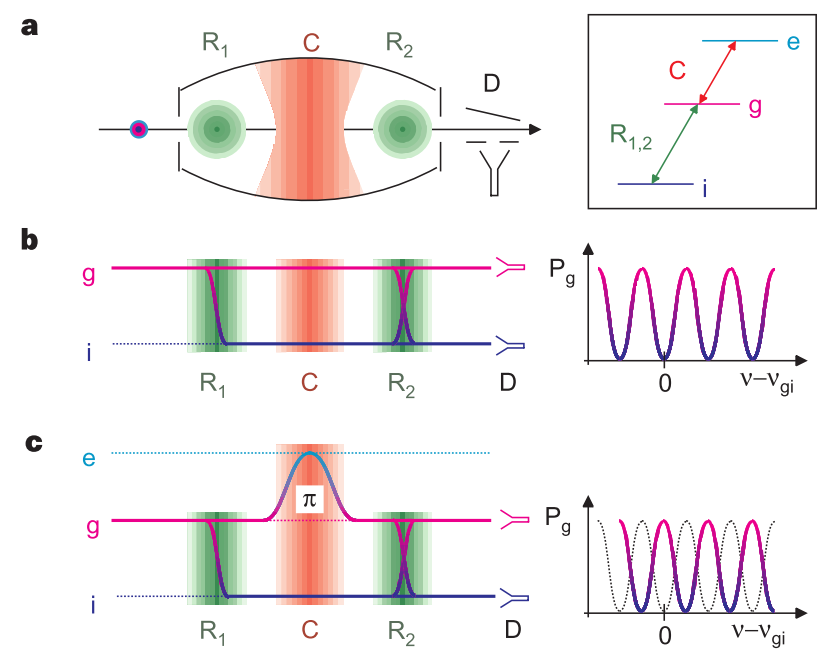
1999 - Non-destructive measurement of single photon in a superconducting microwave cavity using Rydberg atoms
Figure 1. reprinted by permission from Springer Nature: Macmillan Magazines Ltd, Nature 400, 239, G. Nogues, A. Rauschenbeutel, S. Osnaghi, M. Brune, J. M. Raimond and S. Haroche, "Seeing a single photon without destroying it", © 1999.
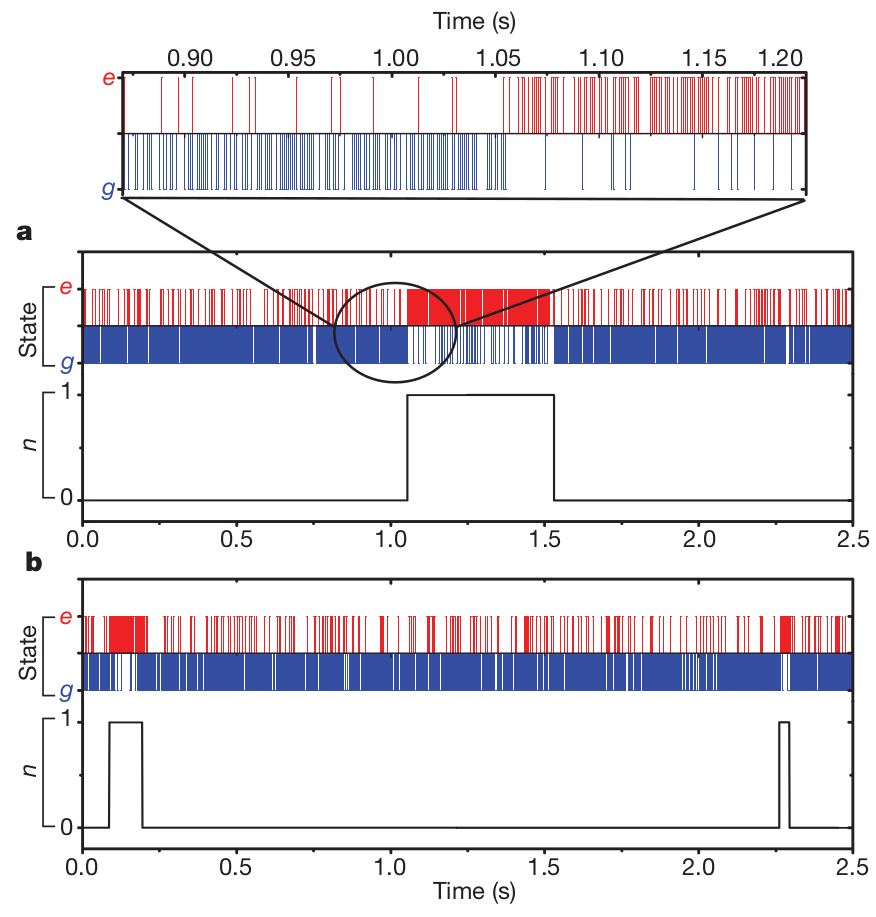
2007 - Quantum nondemolition measurement shows quantum jumps in the number of photons contained in a superconducting microwave cavity
Figure 2. reprinted by permission from Springer Nature: Nature Publishing Group, Nature 446, 297, "Quantum jumps of light recording the birth and death of a photon in a cavity", S. Gleyzes, S. Kuhr, C. Guerlin, J. Bernu, S. Deléglise, U. B. Hoff, M. Brune, J.-M. Raimond and S. Haroche, © 2007.
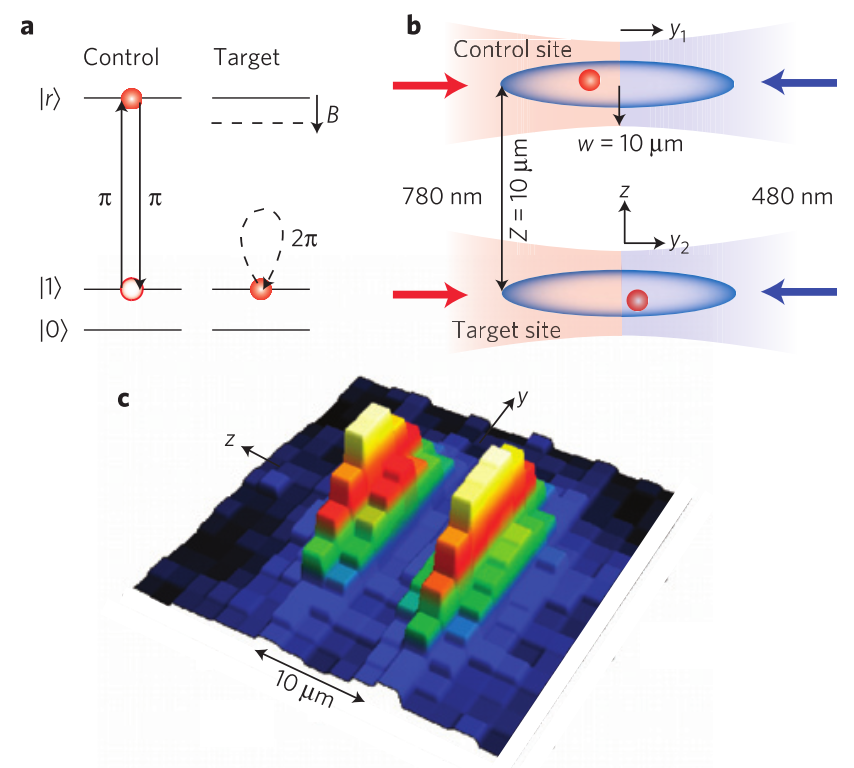
2009 - Observation of Rydberg blockade between the two atoms held in separate optical traps separated by more than 10 μm
E. Urban, T. A. Johnson, T. Henage, L. Isenhower, D. D. Yavuz, T. G. Walker and M. Saffman, "Observation of Rydberg blockade between two atoms", Nature Physics 5, 110 (2009) and A. Gaëtan, Y. Miroshnychenko, T. Wilk, A. Chotia, M. Viteau, D. Comparat, P. Pillet, A. Browaeys and P. Grangier, "Observation of collective excitation of two individual atoms in the Rydberg blockade regime", Nature Physics 5, 115 (2009)
Figure 1. reprinted by permission from Springer Nature: Springer Nature, Nature Physics 5, 110, "Observation of Rydberg blockade between two atoms", E. Urban, T. A. Johnson, T. Henage, L. Isenhower, D. D. Yavuz, T. G. Walker and M. Saffman, © 2009.
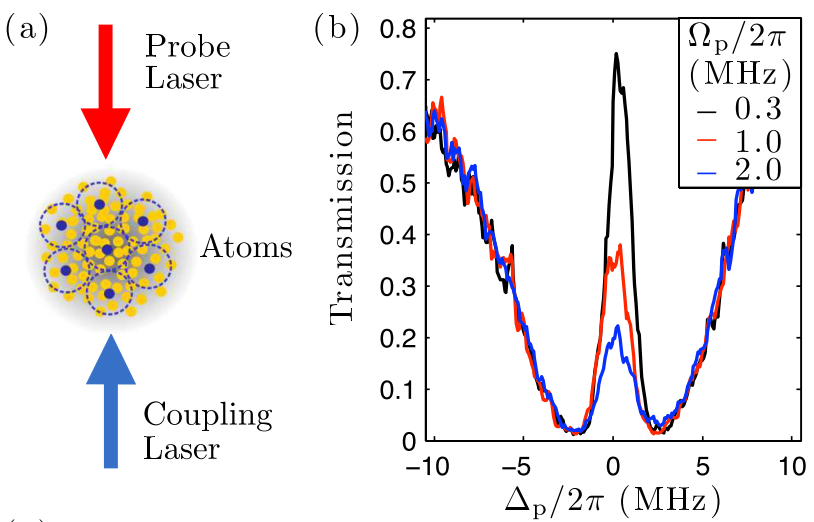
2010 - Observation of few photon nonlinearity in electromagnetically induced transparency due to Rydberg interactions
Reprinted figure 1 with permission from J. D. Pritchard, D. Maxwell, A. Gauguet, K. J. Weatherill, M. P. A. Jones and C. S. Adams, "Cooperative atom-light interaction in a blockaded Rydberg ensemble." Physical Review Letters 105, 193603 (2010). Copyright 2010 by the American Physical Society.
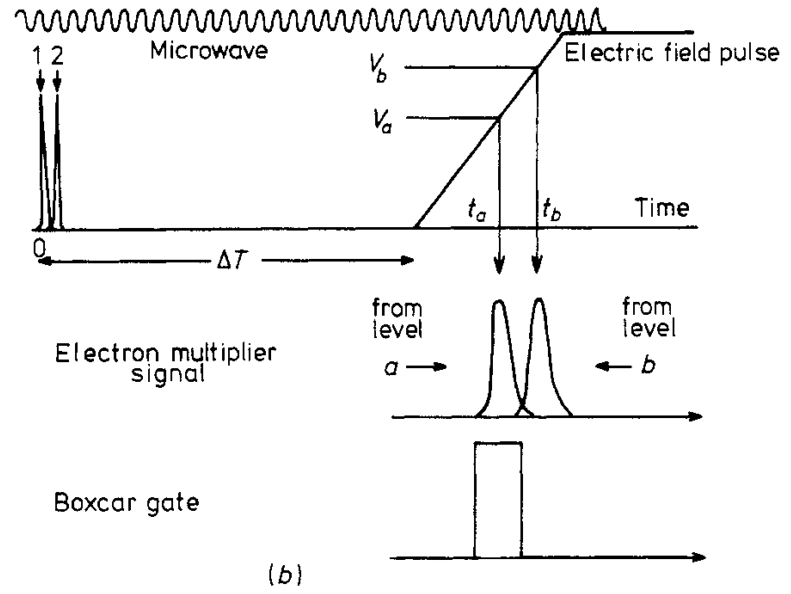
1977 - Precise measurements of microwave transitions between Rydberg levels. Employed field ionization allows state resolving measurement of atomic populations.
Image credits: Figure 1 reprinted with permission from C. Fabre, P. Goy, and S. Haroche, "Millimetre resonances in Na Rydberg levels detected by field ionization: quantum defects and Stark-effect studies", Journal of Physics B: Atomic and Molecular Physics 10, L183 (1977), © IOP Publishing Ltd 1977.
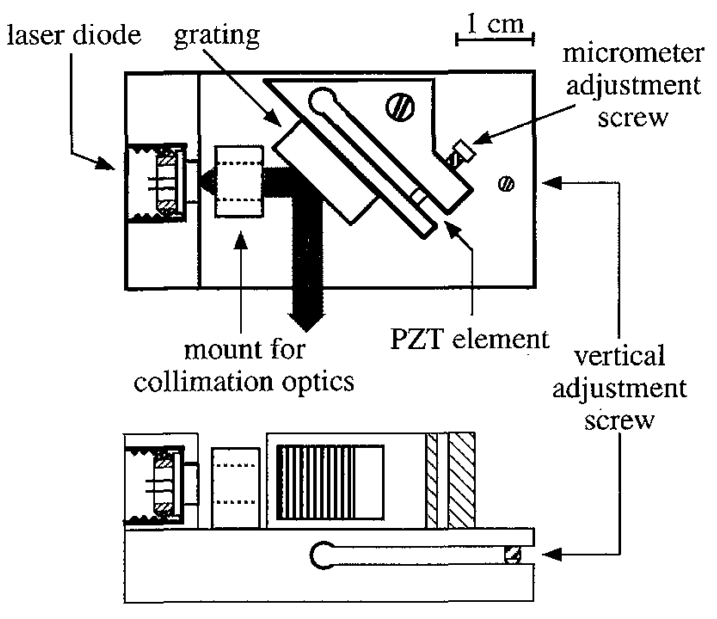
1985-1995 - Development of compact, frequency stabilised diode lasers.
Diode lasers are the workhorse of modern atomic phyisics experiments, providing range of required wavelenghts for coherent driving of atomic levels. For a review see C. E. Wieman, and L. Hollberg, "Using diode lasers for atomic physics", Rev. Sci. Instrum. 62, 1 (1991)
Figure 1. reprinted from Optics Communications, 117, L. Ricci, M. Weidemüller, T. Esslinger, A. Hammerich, C. Zimmerman, V. Vuletic, W. König and T. W. Hänsch , "A compact grating-stabilized diode laser system for atomic physics", 541, Copyright (1995), with permission from Elsevier.
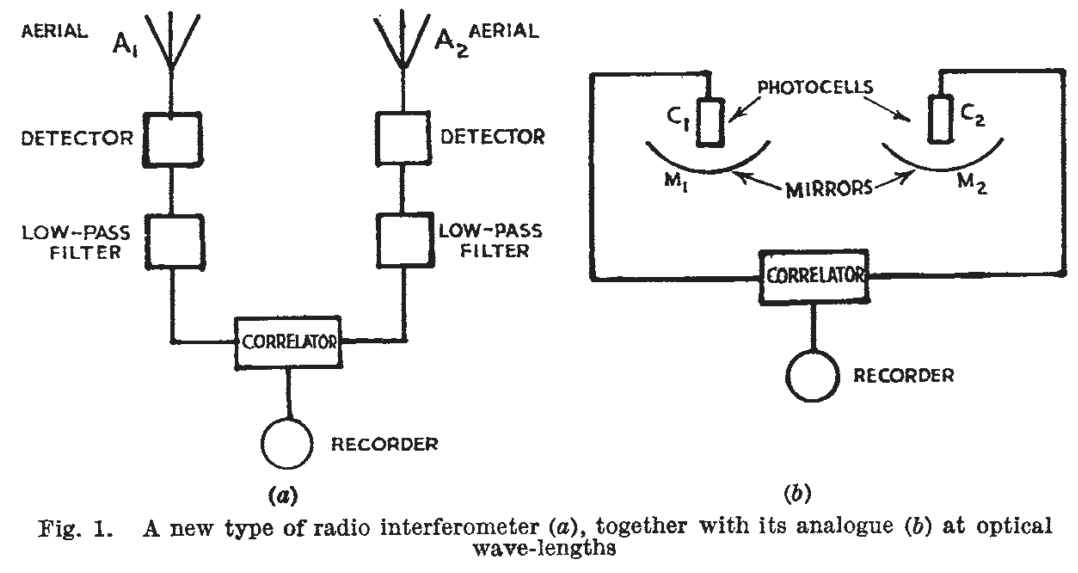
1954 - R. H. Brown and R. Q. Twiss measure correlations between photons in two different beams
R. H. Brown and R. Q. Twiss, Phil.Mag. 45, 663 (1954)
Figure 1. reprinted by permission from Springer Nature: Nature Publishing Group, Nature 177, 27, R. Hanbury Brown and R. Q. Twiss, "Correlation between Photons in two Coherent Beams of Light", © 1956.
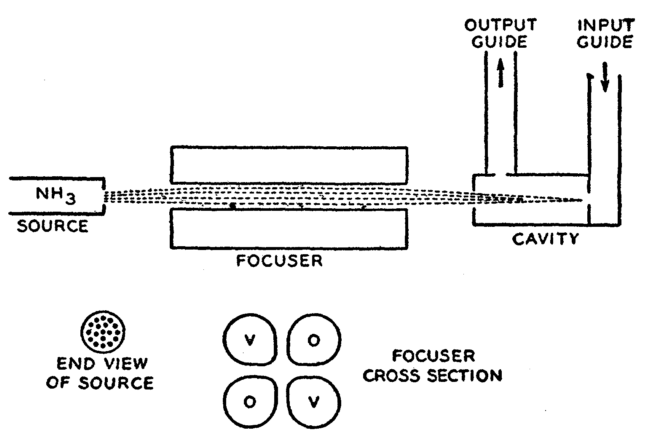
1955 - Stimulated emission was used to achieve coherent amplification of the radiation in the microwave regime.
Figure 1 reprinted with permission from J. P. Gordon, H. J. Zeiger, and C. H. Townes, "The Maser—New Type of Microwave Amplifier, Frequency Standard, and Spectrometer" Physical Review 99, 1264 (1955). Copyright 1955 by the American Physical Society.
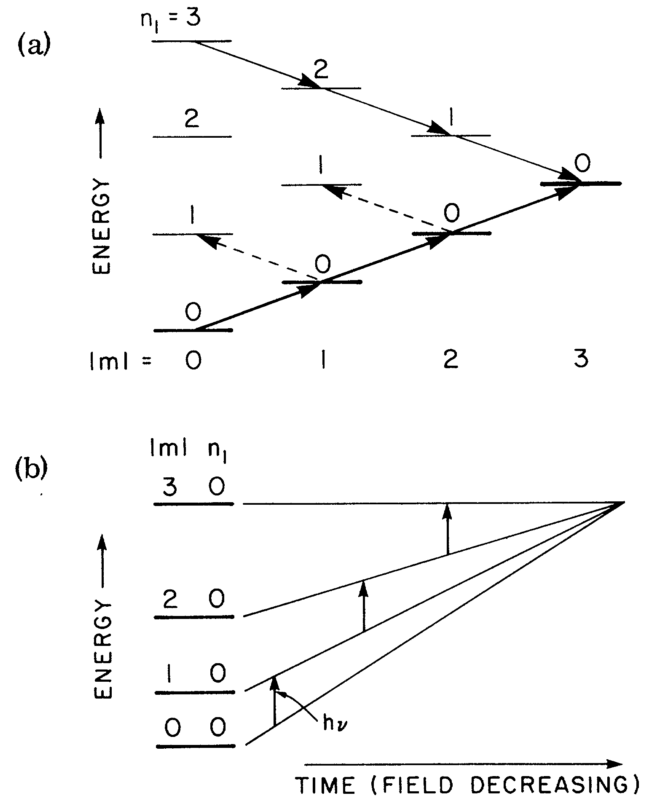
1983 - Combination of level tuning with static electric fields and selective microwave coupling of states was used to adiabatically transfer atomic population from an initial, low-orbital angular momenutum Rydberg state, to a high-orbital angular momentum state.
Figure 1 reprinted with permission from R. G. Hulet and D. Kleppner, 'Rydberg Atoms in “Circular” States', Physical Review Letters 51, 1430. Copyright 1983 by the American Physical Society.